
Introduction
The Importance of a Family-Friendly Organized Home
Creating a family-friendly organized home is more than just keeping a tidy space; it’s about crafting an environment that fosters growth, creativity, and relaxation. A well-organized home sets the stage for children to develop good habits, reduces stress for the entire family, and makes it easier to enjoy quality time together. With designated places for toys, books, and crafts, children learn responsibility and the value of taking care of their belongings. Moreover, a clutter-free space can enhance safety by reducing the risk of accidents, making it a haven where families can thrive.
Understanding the Challenges of Organizing with Kids
Organizing a home with children in the mix presents a unique set of challenges. Kids are naturally curious and playful, which often leads to a trail of toys and art supplies scattered throughout the house. Their constant growth means clothes and gear need regular sorting to keep up with their changing needs. Additionally, involving kids in the organizing process requires patience and strategies that cater to their abilities and attention spans. Recognizing these challenges is the first step towards creating a family-friendly organized home that works for everyone.
Goals of the Article
This article aims to provide practical advice and strategies for families looking to create and maintain an organized home in the midst of the beautiful chaos that comes with raising children. We’ll explore foundational organizing principles, such as decluttering and categorization, and offer room-by-room tips tailored to the needs of a bustling household. By overcoming common organizational hurdles and establishing maintainable systems, families can achieve a harmonious balance between neatness and the lively dynamism of a home filled with kids. Let’s embark on this journey to transform your living spaces into a sanctuary of order and happiness.
Setting the Foundation: Organizing Principles
Decluttering: The First Step to Organization
Embarking on the journey to a neatly organized home begins with the essential process of decluttering. This is the act of sifting through belongings and deciding what to keep, what to donate, and what to discard. Decluttering is not just about creating space; it’s about making room for efficiency and peace of mind. For families with children, this step can be particularly challenging, as kids often form attachments to their possessions. However, by involving them in the process and making it a fun family activity, decluttering can teach children about the value of space and the importance of letting go of items they no longer use or need.
Categorization: A Place for Everything
Once the clutter is cleared, the next step is categorization. This involves sorting items into groups that make sense for your family’s lifestyle. Toys, books, clothes, and other belongings should have their designated spots. Categorization not only aids in finding things quickly but also helps in returning items to their rightful place after use. Implementing simple labeling systems can be a fun way for kids to learn organization skills and take responsibility for their own items.
Accessibility: Keeping It Kid-Friendly
Organizing a home with children in mind means ensuring that the organization system is accessible to them. This could mean placing hooks at a lower height so kids can hang up their coats, using open bins for toy storage, or keeping everyday dishes in a drawer instead of a high cabinet. Accessibility empowers children to participate in maintaining the organization of the home and fosters independence.
Maintainability: Systems for Sustaining Order
The final principle is maintainability. An organized home is not a static one; it requires systems and routines that support ongoing order. This might include daily tidy-up times before bed, a weekly “reset” where everyone helps return the home to its organized state, or a monthly check to declutter again. By establishing these habits, families can ensure that their organizing efforts are not in vain and that their home remains a calm and welcoming space for all members.
In conclusion, setting a strong foundation with these organizing principles not only creates a more functional living space but also instills lifelong skills in children. By decluttering, categorizing, ensuring accessibility, and maintaining order, families can enjoy a home that supports their needs and activities, making life with kids a little less chaotic and a lot more enjoyable.
Strategies for Family-Friendly Organization
Involving Kids in the Organizing Process
Engaging children in the organization of their living spaces not only helps lighten the load for parents but also instills a sense of responsibility and pride in kids. Start by assigning colors or designs to each child’s belongings to simplify identification and ownership. For example, one child might have a blue toothbrush, blue towel, and blue storage bins, while another might have all things green. This visual system can be extended to clothing, school supplies, and even chores. Encourage children to participate in decluttering, allowing them to decide which toys or clothes they no longer need. This involvement can transform organizing from a chore into a fun family activity.
Storage Solutions for Shared Spaces
Shared spaces can quickly become cluttered without proper storage solutions. Utilize multi-purpose furniture, such as ottomans with storage or beds with drawers underneath, to maximize space. Consider installing lockers or designated bins for each family member to store their personal items. In the kitchen, clear, stackable containers can help keep food items visible and organized. For paperwork and miscellaneous items, adhesive pocket organizers on the inside of cabinet doors can keep counters clutter-free. Remember, the goal is to have a place for everything, making it easier for all family members to find and return items.
Personalizing Spaces for Individual Needs
While shared spaces require a communal approach, individual spaces should cater to the specific needs of each family member. For instance, create a personalized study area for each child, equipped with supplies and storage that reflect their unique preferences and study habits. In the bedroom, use dividers in drawers for clothes and accessories to help maintain order. For craft supplies or toys, color-coordinated bins or labels can help children easily identify where items belong. Personalizing spaces not only helps keep them organized but also gives each family member a sense of ownership and pride in their environment.
Creating Kid-Friendly Systems
Organization systems should be intuitive for kids to follow. Use pictures or icons for non-readers to label bins and shelves. Establish simple routines, such as a “one in, one out” rule for toys to prevent accumulation. Create a “homework box” with all necessary supplies to streamline study time. For clothing, consider a “day of the week” closet organizer to plan outfits in advance. By creating systems that children can easily understand and maintain, you encourage them to take an active role in keeping their spaces neat and organized.
By implementing these strategies, you can create a home environment that is both organized and welcoming for all family members. Remember, the key to successful family-friendly organization is to make the process as inclusive, simple, and fun as possible.
Room-by-Room Organizing Tips
The Living Room: Balancing Comfort and Cleanliness
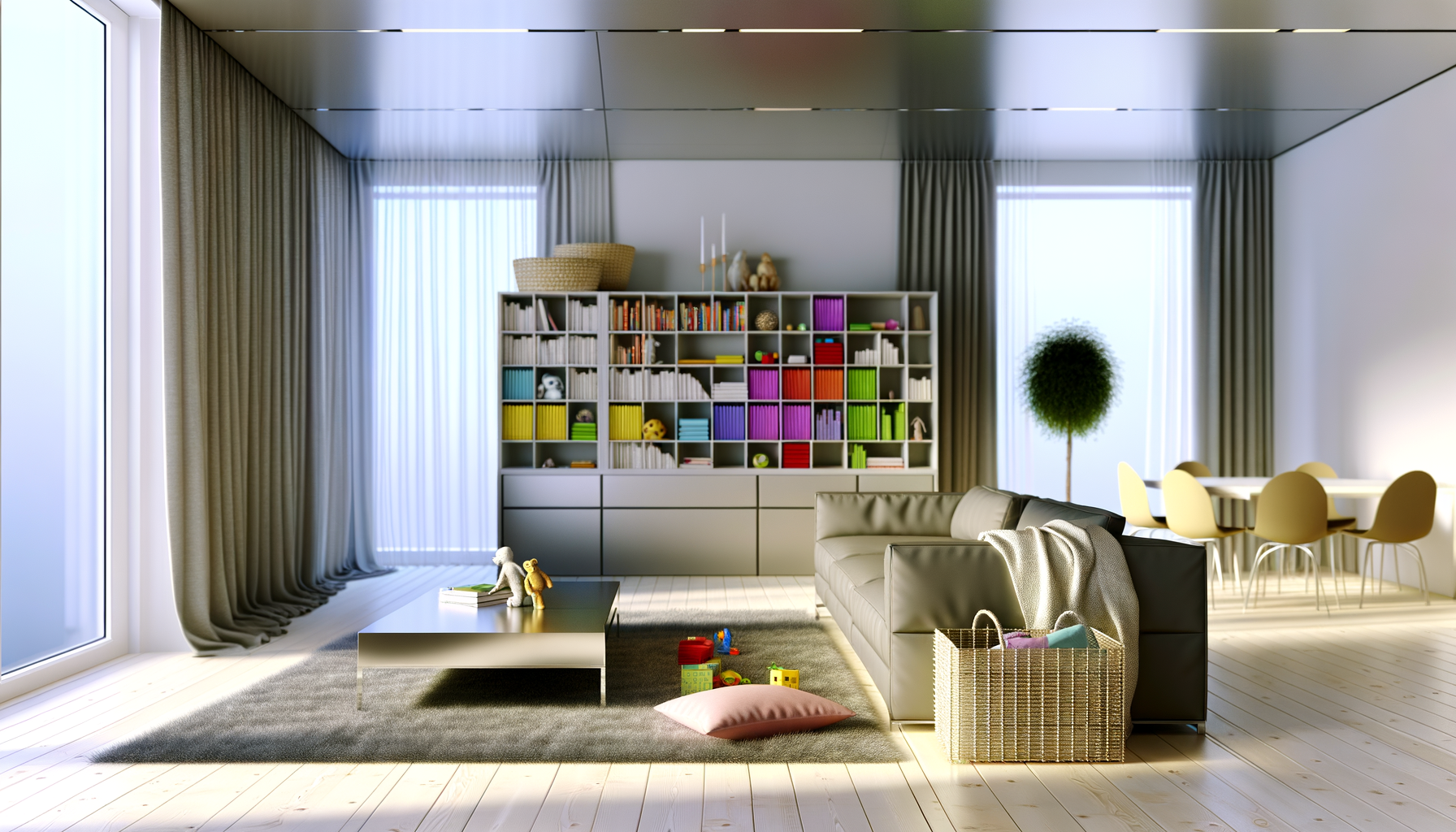
The living room is often the heart of the home, where family gathers and guests are entertained. To maintain a balance between comfort and cleanliness, consider multi-functional furniture with built-in storage to hide away toys and blankets. Use baskets or bins for quick clean-ups and designate a specific area or shelf for children’s books and games. Encourage children to take responsibility for their belongings with a simple reward system for keeping the space tidy.
The Kitchen: Streamlining for Efficiency
Kitchens can be chaotic, especially during meal prep. Streamline your kitchen by grouping similar items together and storing them within easy reach. Use clear containers to store dry goods and label shelves to help family members find and return items. A low-access drawer for kids’ utensils and plates empowers them to help set the table and fosters independence. Consider a magnetic chalkboard on the fridge for grocery lists and family schedules to keep everyone informed.
Bedrooms: Personal Space Organization
Bedrooms should be a sanctuary for each family member. Utilize under-bed storage for off-season clothing or toys and install closet organizers to maximize space. Assign each child a color for their personal items, such as hampers or toothbrushes, to prevent mix-ups. For shared bedrooms, consider loft beds to create more floor space for play and study areas. Encourage children to make their beds daily to instantly boost the room’s neatness.
Bathrooms: Maximizing Limited Space
Bathrooms often have limited space, so it’s essential to keep them well-organized. Use over-the-door hooks for towels and robes, and install a shower caddy to keep essentials within reach. Assign each family member a colored bin for their personal items to avoid clutter on the countertop. If space allows, a small step stool can help younger children reach the sink and foster good hygiene habits.
Play Areas: Organizing for Fun and Function
Play areas should be inviting and promote creativity while being easy to tidy. Use clear bins to sort toys by category and label them with pictures for pre-readers. Bookshelves with forward-facing books entice young readers and make it simple for them to put books back. A craft area with washable surfaces and accessible supplies encourages artistic expression without the fear of messes. Regularly rotate toys to keep the space fresh and engaging.
By implementing these room-by-room tips, your home can be a more organized, functional, and enjoyable space for the whole family.
Overcoming Common Organizational Hurdles
Dealing with Constant Change and Growth
As children grow, their needs and interests evolve, leading to a continuous cycle of outgrown clothes, toys, and equipment. To manage this, establish a regular schedule for sorting and purging items. Consider a seasonal review of belongings, donating or selling items that are no longer needed. Engage children in the process by encouraging them to choose items to pass on to others, fostering a sense of generosity and decision-making.
Managing Toys and Art Supplies
Toys and art supplies can quickly overwhelm a space if not kept in check. Use clear storage bins or shelves with labeled baskets to organize these items, making it easy for kids to find what they’re looking for and put things away. Rotate toys periodically to keep interest high and clutter low. For art supplies, consider a mobile cart that can be wheeled away when not in use, keeping creative tools accessible but orderly.
Keeping Up with Laundry and Clothing
Laundry is a never-ending task in a household with children. To keep it manageable, set up a centralized laundry system with clearly marked bins for colors, whites, and delicates. Involve kids by making it their responsibility to sort their clothes accordingly. Implement a regular laundry schedule and consider assigning each family member a day for their laundry to be done, preventing pile-ups and lost items.
Containing the Clutter of Daily Life
Daily life comes with a trail of clutter, from school papers to sports equipment. Create a “drop zone” near the entrance of your home with hooks for coats, baskets for shoes, and a file organizer for important papers. Teach children to use this area to keep everyday items from spreading throughout the house. Additionally, a weekly reset where the family works together to return items to their proper places can prevent clutter from becoming overwhelming.
By addressing these common organizational hurdles with practical strategies and involving the whole family in the process, maintaining a neat home becomes an achievable goal, even with kids in tow.
Maintaining an Organized Home: Tips and Tricks
Daily Routines for a Tidy Home
Maintaining an organized home with children requires daily effort. Establishing routines can help keep the chaos at bay. Encourage children to make their beds each morning and put dirty clothes in the hamper. Designate a time for a quick daily tidy-up, such as before dinner or bedtime, where everyone pitches in for 10-15 minutes. Use this time to clear surfaces, put away toys, and prep for the next day. Consistency is key, and when these tasks become habitual, they contribute significantly to a neater home.
Weekly Cleaning Systems
Weekly cleaning tasks can be more intensive and require a family effort. Create a cleaning schedule that assigns specific tasks to each day of the week, such as vacuuming on Mondays or cleaning bathrooms on Wednesdays. This breaks down the workload and makes it more manageable. For added motivation, incorporate rewards for completed chores or make it a game to see who can complete their tasks the fastest.
Seasonal Decluttering and Reorganization
As seasons change, so do the needs of your home. Take time to declutter and reorganize spaces to suit the current season. This might mean storing away winter clothing and gear or donating toys that are no longer in use. Seasonal decluttering can also be an opportunity to involve kids in decisions about what to keep, donate, or throw away, teaching them valuable lessons about letting go and organization.
Involving the Whole Family in Maintenance
Organization is not a one-person job; it’s a family affair. Assign age-appropriate chores to each family member and ensure everyone understands their responsibilities. Use a chore chart to track progress and hold each other accountable. Regular family meetings can be a great time to discuss what’s working and what’s not, allowing for adjustments to the system as needed. Remember, the goal is to work together to maintain a home that feels orderly and functional for everyone.
By incorporating these tips and tricks into your family’s routine, you can maintain a more organized home that feels manageable, even with the hustle and bustle of family life. It’s about creating habits, working together, and understanding that while perfection isn’t the goal, a sense of order and calm can make all the difference.
Conclusion
The Benefits of a Family-Friendly Organized Home
Creating a family-friendly organized home is more than just a way to keep up appearances; it’s about crafting a space that promotes harmony, reduces stress, and enhances the quality of life for all family members. A well-organized home sets the stage for children to develop responsibility and learn the importance of tidiness. It also allows for smoother daily routines, as everything has its place, making morning rushes and bedtime routines less chaotic. Moreover, a decluttered space can improve safety by reducing the risk of accidents, and it can even foster creativity by providing a structured environment where kids can freely express themselves.
Encouragement to Begin the Organizing Journey
Embarking on the journey to organize your home with kids in tow may seem daunting, but it’s a venture that yields invaluable rewards. Start small, perhaps with a single drawer or shelf, and gradually work your way through the home. Remember, organization is not a one-time event but a continuous process. Celebrate the small victories with your family, and let those successes motivate you to keep going. The key is consistency and patience; your efforts will pay off in creating a serene and welcoming home environment.
Final Thoughts and Encouragement
As we wrap up this guide on family-friendly organizing, it’s important to acknowledge that perfection is not the goal—functionality and joy are. Embrace the unique dynamics of your family and tailor your organizing strategies to suit your lifestyle. Involve your children in the process, making it a fun and educational experience. And most importantly, be kind to yourself; it’s okay if things don’t always go according to plan. An organized home is a journey, not a destination, and every step forward is a step towards a more peaceful and enjoyable family life. So take a deep breath, gather your loved ones, and start this rewarding journey together.